NFL Coaching Impact on Player Prop Markets
 Available in US
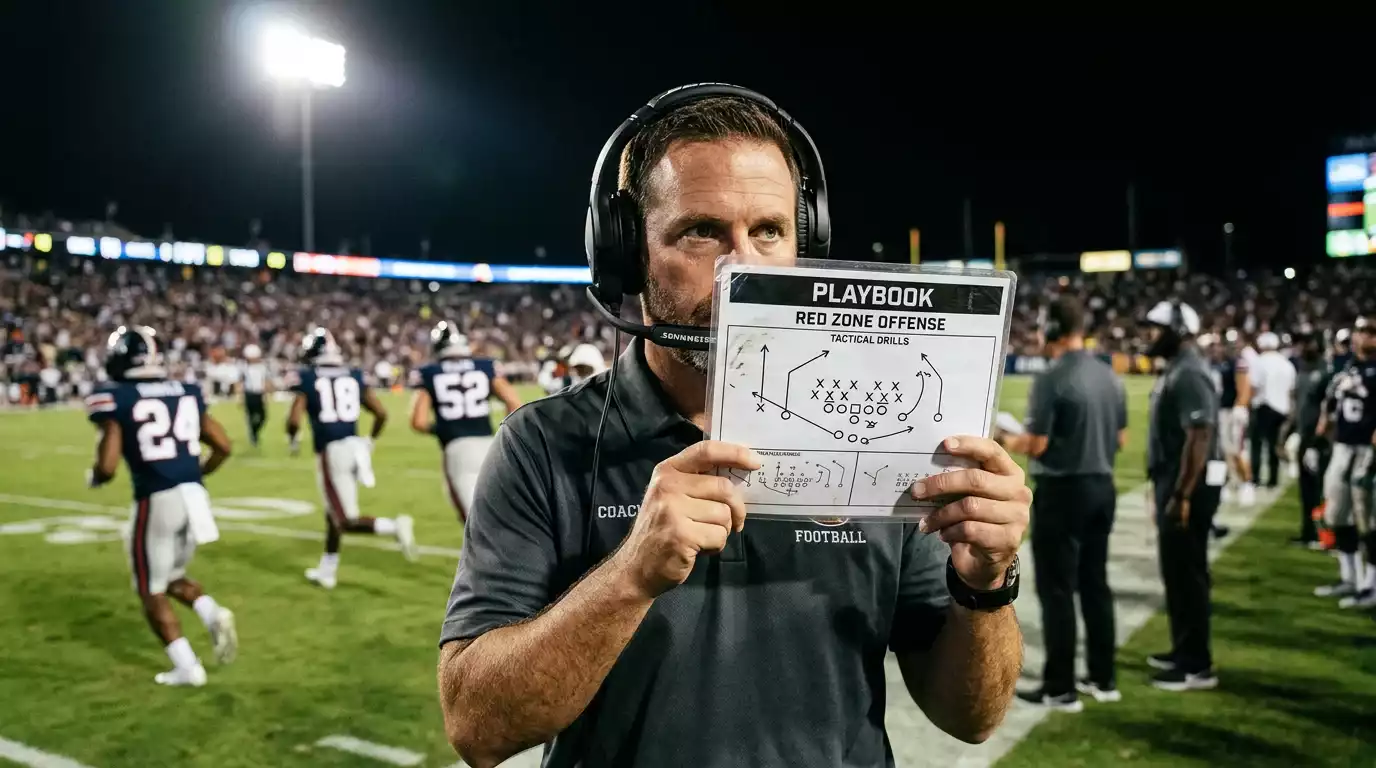
A few seasons ago, a team hired a new offensive coordinator in the off-season. The previous coordinator had run a pass-heavy system – 62% pass rate, top-five in pace, a quarterback throwing 38 times per game. The new coordinator came from a school of run-first football. By Week 4 under the new system, the pass rate had dropped to 52%, the pace slowed, and the quarterback was throwing 30 times per game. Every passing and receiving prop on that team’s board needed recalibrating – and the sportsbook models, still weighted toward the previous season’s data, were slow to adjust.
Coaching is the invisible variable in NFL prop betting. It shapes every aspect of a player’s statistical output: how many plays the offence runs, what ratio of passes to runs it calls, how fast it operates, and how aggressive it is in specific situations. Yet most prop bettors never look at coaching tendencies because the data is harder to find than player stats and less satisfying to analyse than matchup numbers. That avoidance creates edge for anyone willing to do the work.
Run-Heavy and Pass-Heavy Scheme Prop Betting
Unders on NFL player props win approximately 60% of the time across multiple seasons per CBS Sports tracking, and coaching philosophy is a primary reason. Run-heavy teams suppress passing volume, which drags down quarterback yards, completion counts, and receiver production. Pass-heavy teams inflate those same numbers but can also suppress rushing props by reducing carry counts.
The critical metric is neutral-script pass rate – how often a team passes when the game is within one score. This strips out the distortion of game script (teams pass more when trailing, run more when leading) and reveals the coaching staff’s genuine play-calling preference. A team with a neutral-script pass rate of 65% is philosophically committed to throwing the ball. A team at 48% is grinding on the ground.
For prop purposes, this distinction is decisive. A wide receiver on a 65%-pass-rate team has a structurally higher yardage ceiling than an equally talented receiver on a 48%-pass-rate team, simply because the offence generates more passing opportunities. The prop line should reflect that difference, and usually it does – but not always precisely. When a team’s neutral-script pass rate shifts from the previous season due to a coaching change, the models need several weeks to catch up. That lag is your window.
I track neutral-script pass rate alongside overall pass rate for every NFL team. The divergence between the two numbers tells me how much the team’s passing volume is driven by scheme versus game script. A team with a high overall pass rate but a modest neutral-script rate is probably trailing a lot – they’re passing out of necessity, not choice. That distinction matters for prop analysis because necessity-driven passing is less efficient and less predictable than scheme-driven passing.
Tempo and Pace: How Plays Per Game Shape the Ceiling
NFL football makes up roughly 34% of all US sports betting handle per Doc’s Sports data, and within that massive market, tempo is one of the most underappreciated factors for prop pricing. A team that runs 70 plays per game gives every player on the roster more opportunities to accumulate statistics than a team that runs 58. That difference of twelve plays translates directly into more snaps, more targets, more carries, and more chances to hit prop overs.
The fastest offences in the NFL run plays at a pace of roughly 28-30 seconds between snaps. The slowest operate at 32-34 seconds. Over a sixty-minute game, that four-to-six-second difference per play compounds into eight to twelve additional plays for the fast team. For a quarterback on a high-tempo offence, those extra plays might mean four or five additional pass attempts – enough to push a borderline passing yards prop from a coin flip to a comfortable over.
Coaching changes that alter tempo create some of the sharpest early-season prop edges I’ve found. When a new head coach or coordinator brings a significantly different tempo philosophy – faster or slower than the previous regime – the prop lines for the first month of the season are essentially guesses based on the old pace. The models rely on historical plays-per-game data that no longer applies, and the adjustment period creates mispriced lines across the entire offensive prop board.
Mid-Season and Off-Season Coordinator Changes
Off-season coordinator changes are the easier ones to identify and prepare for. Between February and August, every NFL team’s coaching staff is public knowledge, and the tendencies of the incoming coordinator can be researched using his track record at previous stops. I build a profile for every new coordinator that includes his historical pass rate, tempo, red zone play-calling, and fourth-down aggressiveness. That profile sets my baseline expectations for the season.
Mid-season changes are rarer but more disruptive – and more profitable for the prepared bettor. When a team fires its offensive coordinator mid-season, the replacement (often the quarterbacks coach or passing game coordinator stepping up) implements changes under time pressure. The first two games under new leadership are chaotic: play counts drop, formation variety shrinks, and the offence simplifies. Prop lines for those transition games are among the least reliable on the board because the sportsbook’s model has no data for the new coordinator’s scheme. The under on offensive props in the first game under a new coordinator has been one of my highest-conviction plays over the past five seasons.
Defensive coordinator changes affect the other side of the ball. A new defensive coordinator might shift from a zone-heavy scheme to man coverage, or increase the blitz rate, or change how the defence aligns against certain formations. Those shifts affect the opposing team’s offensive props in ways the sportsbook model takes weeks to incorporate. If you study the incoming coordinator’s historical scheme preferences, you can project how the defensive approach will change and identify which offensive props on opposing teams are likely to be mispriced. The matchup metrics that support this analysis – pass defence DVOA, rush yards allowed, blitz rates – are catalogued in the defensive rankings guide.
How quickly do prop lines adjust after an NFL coaching change?
After an off-season hire, the models begin adjusting once the regular season starts and new data comes in — typically by Weeks 3-4. After a mid-season firing, the adjustment is slower because the replacement coordinator has no track record in his new role. Expect two to four games of unreliable prop pricing before the lines stabilise under new leadership.
Does a defensive coordinator change affect offensive player props?
Yes. A new defensive coordinator can alter scheme, blitz frequency, and coverage philosophy, which changes the statistical environment for opposing offensive players. If the new coordinator blitzes more aggressively, opposing quarterback props might shift due to increased pressure. If the scheme moves from man to zone, receiver prop dynamics change. The effect is indirect but measurable once you study the incoming coordinator’s tendencies.
Published by the nfl Best Player Prop Bets team.