Tight End Prop Bets and Red Zone Markets
 Available in US
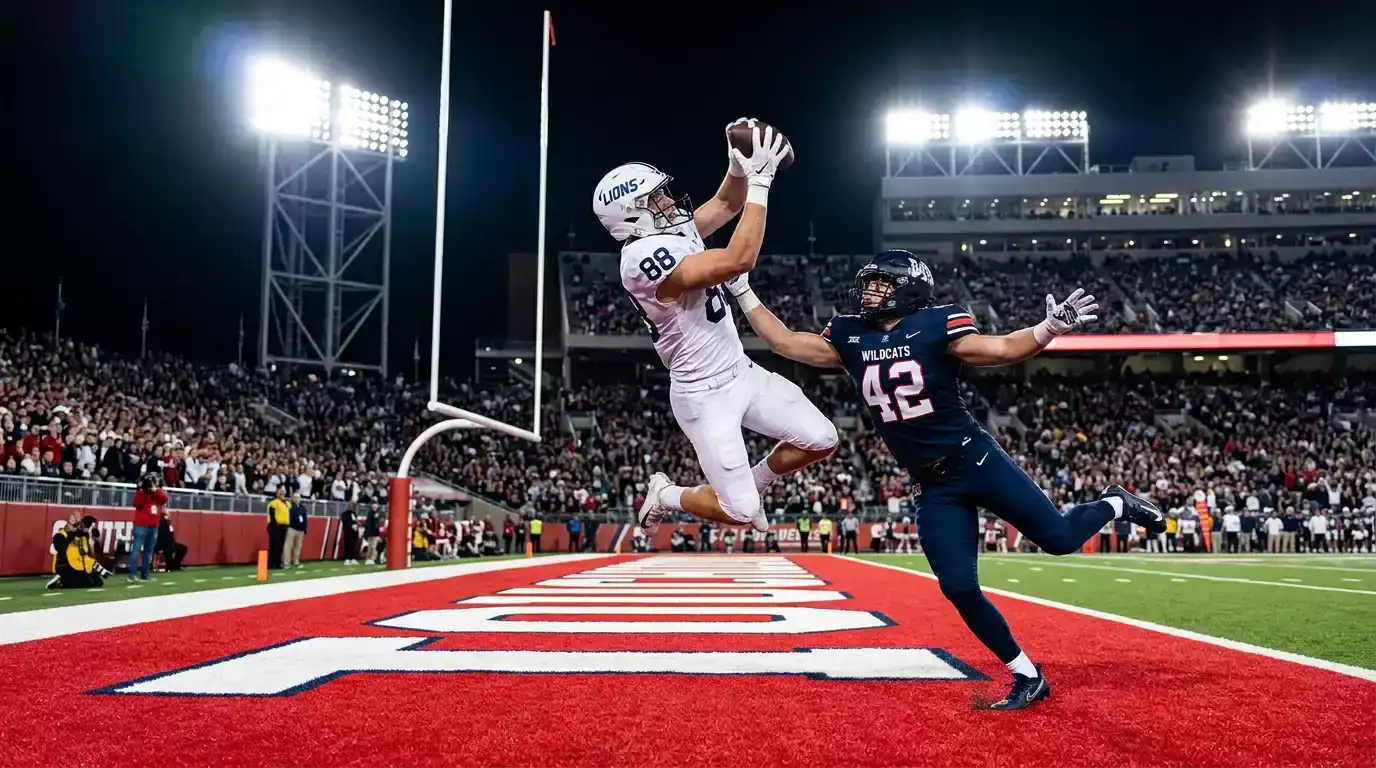
The Kansas City Chiefs are the most popular NFL team in the UK, commanding 9.5% of all NFL-related search queries and roughly 50,000 monthly searches according to Hyperset Group data. A significant part of that popularity traces to one player: Travis Kelce, the tight end who redefined what the position could do in a passing offence. Kelce’s impact goes beyond fandom – he fundamentally shifted how bettors think about tight end props. Before him, tight end receiving yards was an afterthought on the prop board. Now it’s a market with genuine liquidity and, more importantly, genuine edges for anyone willing to study the matchup dynamics.
Tight ends occupy a unique space in prop betting because they create structural mismatches that other positions don’t. A wide receiver faces a cornerback – roughly the same size, similar speed. A tight end lined up against a linebacker faces someone slower and less agile. Against a safety, he faces someone smaller and less physical. Those mismatches produce opportunities that the prop market doesn’t always price correctly.
Tight End Receiving Yards and Usage Metrics
The anytime touchdown scorer is the most popular player prop by handle per industry data, and tight ends feature prominently in that market because of their red zone role. But for receiving yards props, talent is secondary to usage – and usage at the tight end position varies more dramatically than at any other skill position.
Some tight ends are functionally wide receivers who happen to line up with a hand in the dirt occasionally. They run full route trees, operate from the slot, and see target shares of 20% or higher. Others are primarily inline blockers who catch two or three passes per game almost as an afterthought. The prop market for the first group is worth engaging with seriously. The prop market for the second group barely exists on most UK platforms, and when it does, the lines are too wide to offer value.
I evaluate tight end receiving props through three filters. First: route participation rate. What percentage of passing plays does the tight end actually run a route rather than staying in to block? Elite pass-catching tight ends run routes on 75-85% of passing plays. Blocking-first tight ends might run routes on 40%. That difference in opportunity is the foundation of everything else. Second: target share within the passing game. Third: average depth of target, which tells me whether the tight end is being used on short check-downs or genuine intermediate routes. A tight end who averages 8-10 yards of target depth has a higher yardage ceiling per catch than one who averages 4-5 yards.
Touchdown Props for Tight Ends: Red Zone Dominance
Three years ago I bet the anytime TD scorer on a tight end who had scored in four of his previous five games. He was priced at relatively short odds, and I hesitated because the price seemed too obvious. He scored again. The lesson: tight ends with genuine red zone roles are among the most reliable anytime TD targets in the entire market.
The reason is structural. Inside the 20-yard line, the field compresses. Cornerbacks are assigned to wide receivers, safeties rotate to deep zones, and linebackers are left to cover tight ends in space that favours the bigger, more physical player. A tight end running a seam route against a linebacker in the red zone is one of the most advantageous matchups in football, and offensive coordinators know it. Red zone target share for tight ends correlates directly with their touchdown production, more consistently than for any other position.
The risk with tight end TD props is the vulture factor. Unlike running backs, tight ends rarely get vultured at the goal line – they’re the vultures. When the offence reaches the one-yard line and calls a play-action pass to the tight end sneaking behind the linebackers, that’s a schemed touchdown designed to exploit exactly the mismatch I described. But when the offence runs the ball at the goal line instead, the tight end gets nothing. Game script and offensive play-calling philosophy determine whether the offence throws in the red zone, and that determination drives tight end TD outcomes more than individual talent does.
Exploiting Linebacker and Safety Mismatches
The matchup advantage for tight ends is measurable, and it’s the single best reason to pay attention to this position for prop betting. When a tight end draws a linebacker in coverage, the speed and route-running differential creates separation that a cornerback-on-receiver matchup doesn’t. When a tight end draws a safety, the size differential creates catch-radius advantages in contested situations.
I look for two specific scenarios. The first: a pass-catching tight end facing a defence that assigns its linebackers to tight end coverage rather than deploying a safety or nickel corner. This happens more often than you’d think – teams with strong linebacker corps sometimes trust their inside defenders to handle tight ends rather than pulling a defensive back out of the secondary. Against an elite receiving tight end, that trust is usually misplaced.
The second scenario: a tight end operating in the slot against a defence that doesn’t adjust its slot coverage assignment. Some defences have a dedicated nickel corner who covers the slot regardless of who lines up there. Others use a rotating cast based on the formation. When the tight end slides to the slot and faces a defender who isn’t accustomed to covering that size and route combination, the mismatch compounds.
The data supports this: tight ends targeted against linebackers produce higher yards per target than tight ends targeted against defensive backs. If you can identify which defences are likely to use linebacker coverage on the tight end – a question answered by formation tendencies and personnel packages – you can isolate the highest-value tight end prop spots each week. The wider framework of position-based matchup analysis, including how slot usage shapes the receiving landscape, is explored in detail at wide receiver prop bets.
Why do some tight ends have better prop value than wide receivers on the same team?
Tight ends who run routes on a high percentage of passing plays and face linebackers or safeties in coverage benefit from structural mismatches that wide receivers don’t have. A wide receiver faces cornerbacks — roughly matched athletes. A tight end against a linebacker has a speed advantage; against a safety, a size advantage. That mismatch can make the tight end’s production more predictable in the right matchup.
How does a team’s pass-first vs run-first identity affect tight end prop lines?
Pass-first teams generate more opportunities for tight end receiving props because the volume of targets increases. Run-first teams reduce overall passing volume, which compresses the tight end’s yardage ceiling. However, run-first teams sometimes create play-action opportunities that disproportionately benefit tight ends running seam routes behind linebackers who bite on the run fake.
Created by the ”nfl Best Player Prop Bets” editorial team.