NFL Parlay Boost Promotions and Enhanced Odds
 Available in US

Every NFL Sunday, my phone buzzes with notifications from sportsbook apps promoting boosted parlays. “Get 5/1 on Mahomes 250+ yards AND Kelce TD!” The presentation is designed to trigger excitement, and it works – DraftKings has reported that its parlay handle mix grows every quarter, driven partly by these promotions. But excitement and value are different things. Most boosts I evaluate don’t pass the mathematical test. The ones that do are worth taking. The trick is knowing the difference, and it takes about three minutes of calculation.
Parlays accounted for 27% of the betting handle in New Jersey but generated 72.5% of sportsbook revenue, per state regulatory data. That ratio tells you everything about why operators spend marketing money on boosted parlays: even with the boost, the product is enormously profitable for the house. The boost reduces the house edge on one specific bet while training your behaviour to build more parlays in the future – where the full margin kicks back in.
Sportsbook Boost Margins on NFL Player Props
A boost typically takes an existing parlay price and increases the payout by a fixed percentage – say, from 4.00 to 5.00 on a three-leg same-game parlay. The question is whether the unboosted price was fair in the first place. If the true probability of all three legs hitting is 20%, a fair price would be 5.00 (1 divided by 0.20). The original unboosted price of 4.00 reflects a 25% implied probability – the sportsbook was charging you 5 percentage points of vig. The boost to 5.00 removes that vig and prices the bet at fair value.
Fair value is not positive expected value. For the boost to offer genuine +EV, the boosted price needs to exceed the fair price. In my example, 5.00 equals fair value but does not beat it – you’d need 5.50 or 6.00 for the bet to carry a mathematical edge. Most boosts I evaluate land in that neutral-to-slightly-negative zone. The sportsbook has removed enough margin to make the promotion feel generous without actually giving away the farm.
The legs matter too. Boosts often combine popular, high-profile selections – a star quarterback’s passing yards with a star receiver’s yardage or touchdown. These are the most efficiently priced props on the board, which means the unboosted price already carried less vig than a niche prop would. Boosting an already tight price creates less value than boosting a wide-margin prop would. Nik Bonaddio, the former Head of Product at FanDuel, estimated that maybe 5% of people understand the house edge on parlays. The other 95% see a boosted number and assume it’s a gift.
How to Calculate Whether a Boost Has Positive Expected Value
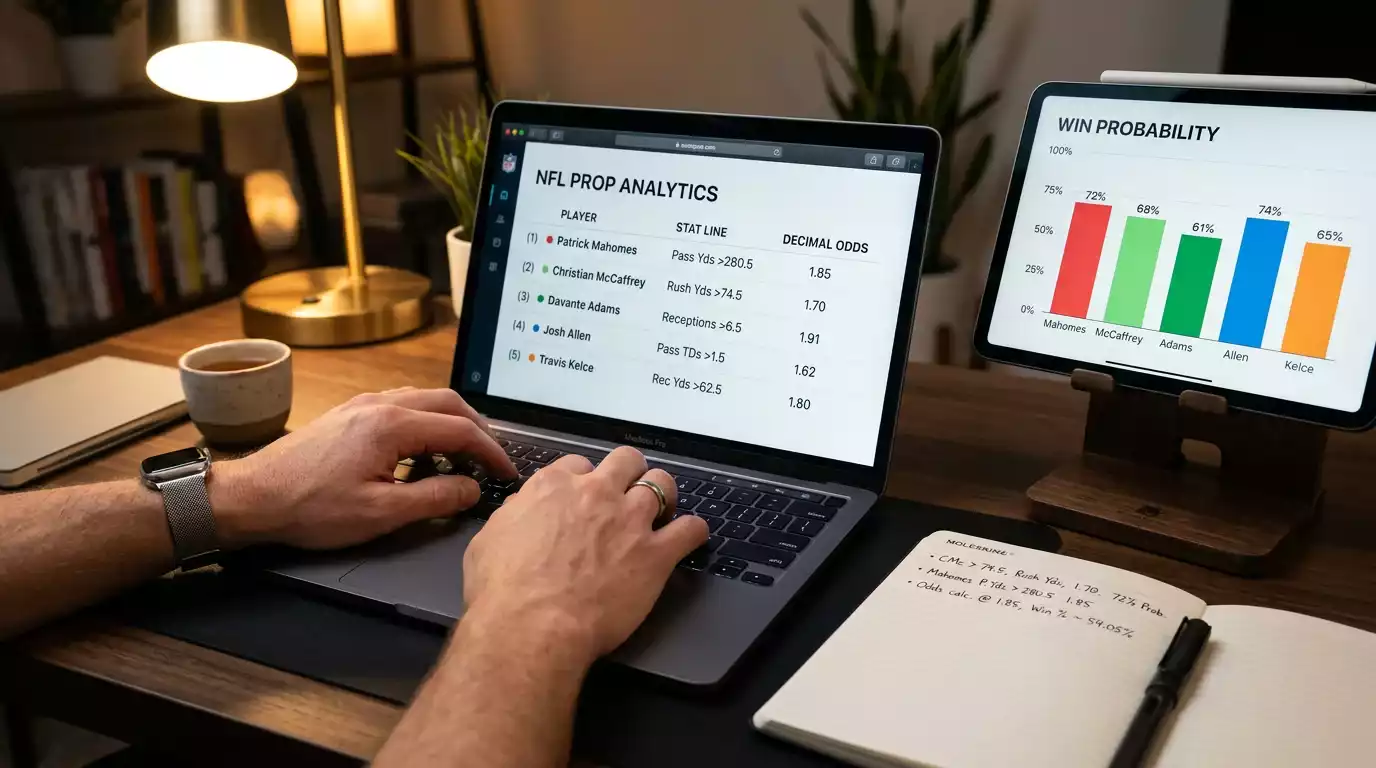
The process takes three steps. First: estimate the true probability of each leg hitting. This is your analytical work – your matchup analysis, your projection model, your assessment of the game environment. If you can’t estimate the probability independently, you can’t evaluate the boost. You’re guessing, and guessing is not a strategy.
Second: multiply the individual probabilities to get the combined probability. If leg one has a 60% chance, leg two has 55%, and leg three has 35%, the combined probability is 0.60 x 0.55 x 0.35 = 0.1155, or 11.55%. The fair price for an 11.55% probability is 1 divided by 0.1155 = 8.66 in decimal odds.
Third: compare the boosted price to your fair price. If the sportsbook is offering 10.00 on a bet you’ve assessed at fair value 8.66, the boost has positive expected value. If it’s offering 7.50, the boost is still negative EV despite looking like a generous promotion. The maths is straightforward; the discipline is doing it every time rather than trusting the marketing copy.
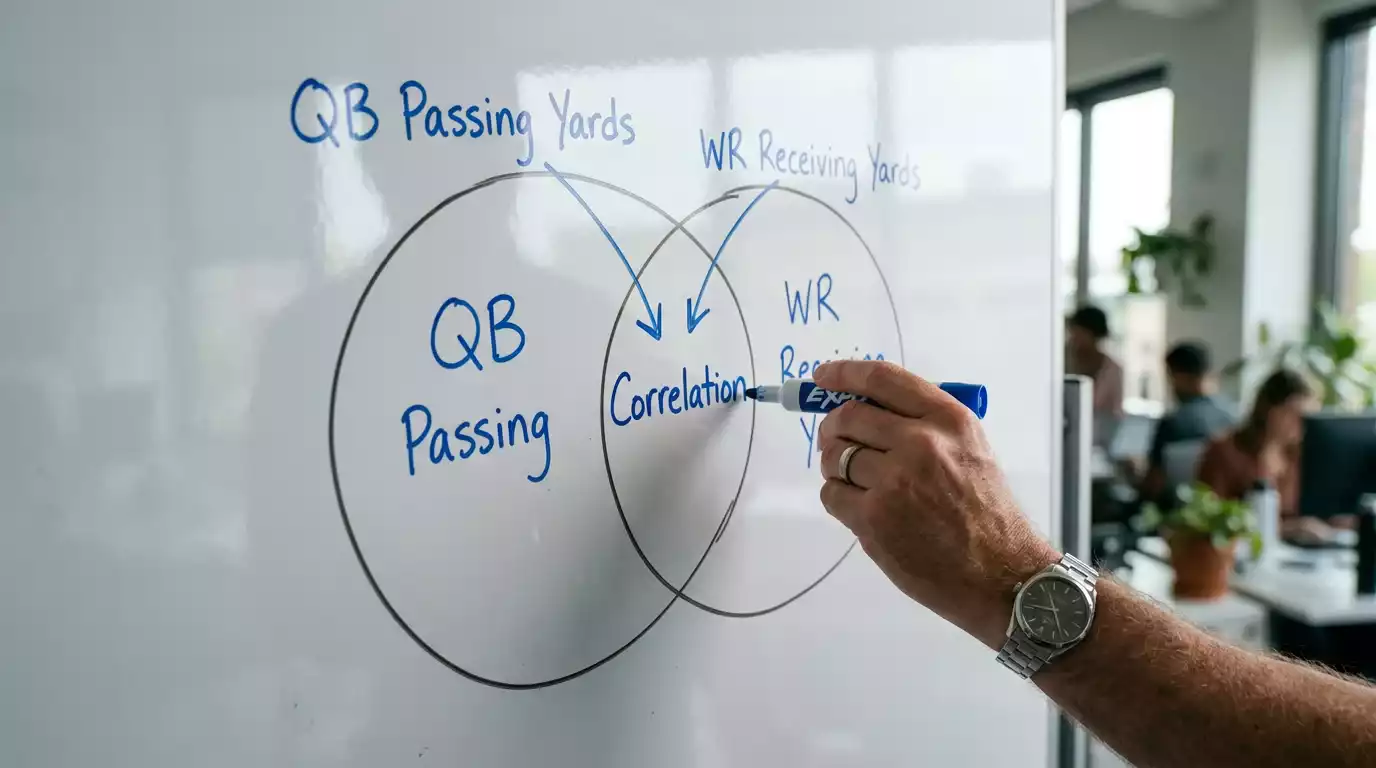
One critical caveat: correlated legs. If two of the three legs in the parlay are positively correlated – say, quarterback passing yards and wide receiver receiving yards on the same team – the true combined probability is higher than the simple multiplication suggests, because one hitting makes the other more likely. The sportsbook’s pricing engine accounts for this correlation by reducing the payout (the correlation tax), but the boost might not fully offset it. I always evaluate whether the legs are correlated before calculating EV, because ignoring correlation is one of the most common analytical errors in parlay evaluation.
The Rare Scenario When a Boost Is Worth Taking
After evaluating hundreds of boosts across multiple NFL seasons, I can identify the profile of the ones that actually offer value. They tend to share three characteristics.
First: the boost percentage is large – 50% or more above the unboosted price. A boost from 4.00 to 4.50 (12.5% increase) rarely crosses the threshold into positive EV. A boost from 4.00 to 6.00 (50% increase) often does, especially if your probability estimates are solid. The larger the boost, the more likely it overcomes the embedded vig.
Second: the legs involve uncorrelated or negatively correlated outcomes. A boost combining a quarterback’s passing yards with the opposing team’s rushing yards is less penalised by the correlation tax than one combining teammates’ stats. Uncorrelated legs let the multiplication of individual probabilities stand without adjustment, which makes the EV calculation more reliable.
Third: the boost targets a less popular game or market. Sportsbooks calibrate their boost generosity based on the expected uptake. A Super Bowl boost will be seen by millions and therefore offers less genuine value. A Thursday Night Football boost for a low-profile game attracts fewer eyes and sometimes offers a genuinely positive-EV price because the marketing spend-per-customer calculation works differently.
When I find a boost that meets all three criteria, I take it – at my standard unit size, not at an inflated stake. Even positive-EV bets lose sometimes, and overcommitting to a parlay because it’s boosted defeats the bankroll management discipline that keeps the entire operation sustainable. The broader mechanics of how SGP pricing works against you without a boost are explored at the same-game parlay guide, where the compounding vig and correlation penalty are broken down step by step.
How do I tell if a sportsbook profit boost is genuinely positive EV?
Estimate the true probability of each leg independently, multiply them to get the combined probability, and divide 1 by that combined probability to get the fair decimal price. If the boosted price exceeds your fair price, the boost has positive expected value. If it falls below, the boost reduces the house edge but does not eliminate it.
Why do sportsbooks offer boosts on same-game parlays more than on single props?
Same-game parlays carry significantly higher built-in margins than single bets. The hold on parlays ranges from 20-30% compared to 4-6% on singles, per industry data. A boost that reduces the margin by 10-15 percentage points still leaves the sportsbook with a healthy edge on the parlay, whereas the same boost on a single prop might eliminate the margin entirely. Boosting parlays is generous marketing that remains profitable.
Written by the editors at nfl Best Player Prop Bets.