Sharp NFL Prop Bets and Professional Action
 Available in US

In 2021, I watched a quarterback’s passing yards prop open at 265.5 on a Tuesday morning and drop to 258.5 by Wednesday evening – before any injury news, before any weather forecast, before any public money had entered the market. The move was invisible to casual bettors. For anyone tracking opening lines, it was unmistakable: sharp money had hit the under, and the sportsbook adjusted. That seven-point swing, driven entirely by professional action, was worth tracking not because I could follow it in real time – the move was already done – but because it told me what the best-informed bettors in the world thought about that game.
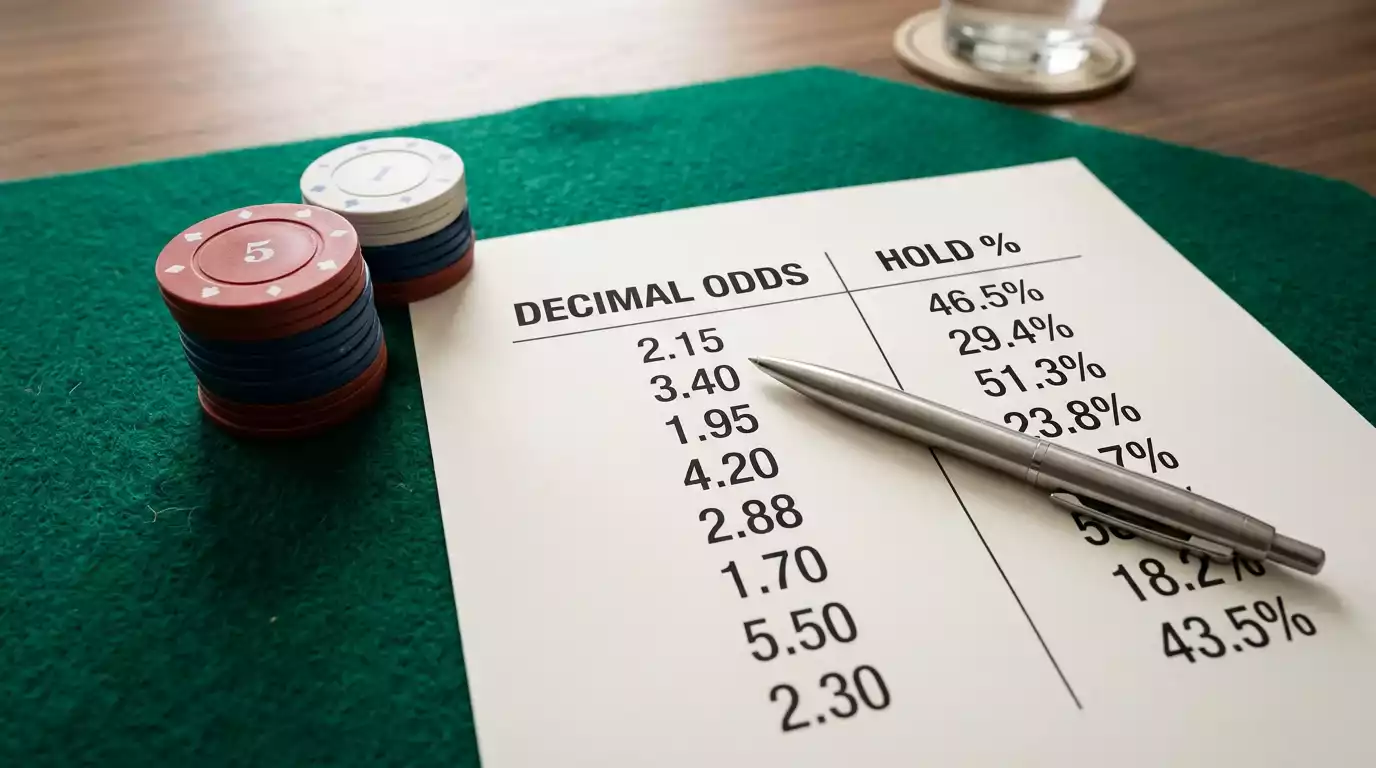
The average sportsbook hold percentage has climbed above 9% per Doc’s Sports analysis, and part of that increase reflects sportsbooks getting better at identifying and managing sharp action. Understanding how professional bettors move lines – and what those movements signal – is a practical skill that translates into better prop decisions even if you never place a bet as large as theirs.
Sharp Money Versus Public Money in Prop Odds
Jason Robins, CEO of DraftKings, described his company’s approach at a Goldman Sachs conference with striking candour. The strategy, he explained, involves getting smart at limiting sharp action while increasing the parlay mix because customers like those products. That single statement reveals the ecosystem: sportsbooks want public money, which is less informed and more likely to lose, while managing professional money, which forces the line to move.
Sharp bettors are a small fraction of the overall handle but a disproportionate influence on line movement. On a mainstream market like the point spread, sharp money and public money often push the line in opposite directions – sharps on one side, the public on the other. On prop markets, the dynamic is different. Public money concentrates on the most popular props – anytime touchdown scorer, quarterback passing yards – while sharp money targets the less liquid markets where the sportsbook’s models are weakest.
That imbalance means prop lines on popular markets are heavily influenced by public bias. The public tends to bet overs on star players and overs on high-profile games. Sharps exploit this by fading the public – taking unders on overhyped props or backing lesser-known players whose lines haven’t been sharpened by volume. Over the course of a season, the public’s systematic biases create persistent value that sharp bettors harvest.
For UK bettors, the practical implication is that the prop lines you see on your sportsbook app reflect a mix of model-driven pricing and public-money adjustment. If a line looks “obvious” – the over on a star quarterback feels like a gift – it’s probably obvious because the sportsbook has adjusted the line toward the public’s expected action. The sharps have already moved on to less obvious spots.
Identifying Sharp Line Movement on Player Props
Reverse line movement is the clearest signal that sharp money has entered a prop market. It occurs when the line moves in the opposite direction from the weight of public bets. If 75% of public bets are on the over for a receiver’s yardage prop, but the line moves from 72.5 to 69.5, the sportsbook has received enough sharp money on the under to override the public consensus. That movement tells you the professionals disagree with the crowd – and the sportsbook respects their opinion enough to move the price.
Tracking opening lines is essential for identifying these moves. Most UK sportsbooks publish NFL prop lines on Tuesday or Wednesday. If you record those opening numbers and compare them to the lines at kickoff, the direction and magnitude of the movement tells a story. A line that moves two or more points without corresponding news – no injury, no weather change, no lineup announcement – has almost certainly been moved by sharp action.
Speed of movement matters too. A prop line that drops overnight suggests a single large bet from a known sharp account. A line that drifts gradually over three days suggests multiple smaller sharp bets arriving independently. The overnight drop is more informative because it’s decisive – the sportsbook moved immediately, signalling high confidence in the source. The gradual drift is still useful but carries more noise.
Closing Line Value: The Benchmark That Matters
Closing line value – the difference between the odds you receive and the odds at the moment the market closes – is the single most reliable measure of betting skill. Since 95% of UK bets are placed online per industry data, the closing line benefits from maximum information efficiency: every sharp bet, every public bet, every piece of news has been absorbed by the time the prop market locks.
If you consistently bet props at prices better than the closing line, you’re beating the market. If you consistently bet at prices worse than the closing line, the market is beating you. Over a season, positive closing line value correlates with profitability more strongly than win rate, ROI, or any other metric. A bettor who wins 48% of their props but consistently gets better prices than closing is almost certainly profitable. A bettor who wins 55% but always bets at worse prices than closing might be breaking even or worse – the vig eats the margin.
I track closing line value for every prop bet I place. The data lives in a spreadsheet next to my win rate and ROI, but it’s the CLV column I look at first when evaluating my process. If my CLV is positive for three consecutive months, my analytical process is working regardless of short-term results. If my CLV turns negative, something in my approach has degraded – maybe I’m betting too late, maybe I’m targeting the wrong markets, maybe my probability estimates have drifted. CLV is the diagnostic tool that tells me whether I’m doing the right things, separate from whether those things are currently winning. For the full picture of how odds and lines interact, the prop odds guide covers implied probability, format conversion, and where UK bettors find the best prices.
Can a recreational bettor benefit from following sharp prop line movement?
Yes, but indirectly. You probably can’t beat the sharps to a line move, but tracking opening-to-closing line movement over time teaches you which types of props the market consistently reprices. If you notice that a specific category of prop — say, tight end receiving yards in certain matchups — consistently moves in the same direction from open to close, that pattern signals a systematic mispricing you can exploit early in the week.
Do UK sportsbooks limit accounts that consistently beat closing lines on props?
Some do. UK sportsbooks, like their global counterparts, monitor customer profitability. Accounts that consistently take sharp prices on props may face reduced maximum stakes or restricted access to certain markets. Maintaining accounts across multiple platforms and varying your bet types can mitigate this, though no approach guarantees immunity from account restrictions.
Written by the editors at nfl Best Player Prop Bets.