Running Back Prop Bets and Rushing Odds
 Available in US
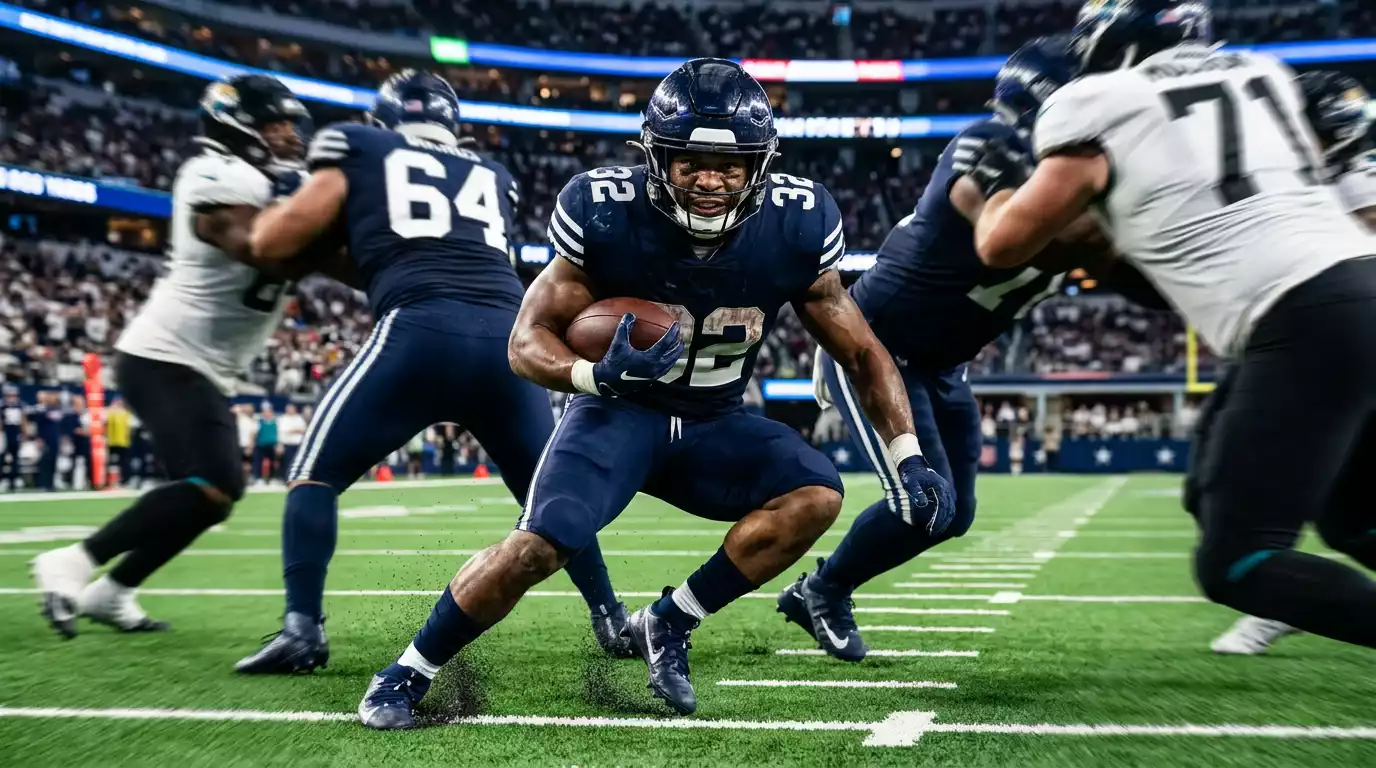
Running backs are the most game-script-dependent position in football, and that dependency is exactly what makes their props interesting. I learned this the hard way during a 2019 Monday night game when I backed a running back’s over on rushing yards, watched his team fall behind 21-3 by halftime, and saw him get exactly four carries in the second half. The game script turned his workload into a ghost, and my bet died with it. That experience rewired how I approach every running back prop I’ve evaluated since.
Unders on NFL player props have won roughly 60% of the time across multiple seasons according to CBS Sports analysis, and running back props are a big reason why. The public loves the over – they want to see a highlight reel – and the sportsbook adjusts accordingly. Understanding why unders carry a structural advantage at this position gives you a head start that most casual bettors never discover.
Factors Moving NFL Rushing Yards Betting Lines
The sportsbook sets a rushing yards line based on three variables, and if you understand all three, you’re ahead of the crowd that only checks one.
First: carry share. A running back who commands 70% of his team’s carries has a vastly more predictable workload than one splitting touches in a committee. The public underweights this distinction constantly. A back with 18 expected carries against an average defence is more bankable for the over than a back with 12 expected carries against a weak defence, even if the second matchup looks better on paper. Volume is the foundation of rushing prop analysis.
Second: defensive rushing efficiency. Not all defences surrender yards equally. Some are vulnerable up the middle, others on the edge. The scheme matters – a defence that stacks eight in the box and dares the pass will suppress rushing output regardless of how talented the back is. I look at yards allowed per carry and rushing success rate allowed as the two metrics that most directly predict a running back’s yardage ceiling.
Third – and this is the one most bettors ignore – game script projection. If the spread suggests a team will be trailing significantly, their running back’s workload will shrink as the coaching staff abandons the run to catch up through the air. Conversely, a team favoured by two touchdowns is more likely to grind the clock with its lead back in the second half, inflating his carries beyond what the pregame line anticipated. Projected game flow is the single biggest variable that the average bettor doesn’t account for.
Goal-Line Work and Touchdown Equity for Running Backs
Touchdown props for running backs hinge on one question that the casual bettor rarely asks: who gets the ball inside the five-yard line?
In the NFL, goal-line carries are not distributed evenly. Some teams have a designated short-yardage back – a different player from the primary rusher who handles the between-the-twenties work. If you bet the anytime touchdown scorer prop on the primary back without checking who gets goal-line touches, you’re playing with incomplete information. The anytime TD market remains the most popular player prop by handle per industry data, so the lines are sharp. You need every informational advantage.
I track goal-line carry percentage as a standalone metric. A back who receives 80% of carries inside the five has substantially more touchdown equity than one who splits that work. The difference in implied TD probability between those two situations often isn’t fully reflected in the anytime scorer odds, which creates genuine value for the bettor willing to dig into the data.
Vulture touchdowns – scores by a backup who enters specifically for goal-line situations – are one of the most frustrating experiences in prop betting. Your running back dominates between the twenties, racks up 90 yards, and then the coaching staff sends in a 240-pound battering ram for the one-yard plunge. Knowing whether a team employs a vulture back is non-negotiable preparation before betting any running back TD prop.
Receiving Props for Pass-Catching Backs
The prop market that’s grown fastest at the running back position isn’t rushing yards – it’s receiving yards. The NFL has evolved toward pass-catching backs who line up in the slot, run routes out of the backfield, and function as a safety valve on third downs. For those players, receiving props offer a distinct edge that rushing props don’t.
Why? Because defensive matchups on backs who catch passes create mismatches that are easier to identify. A running back lined up against a linebacker in coverage has a speed and agility advantage that’s measurable. When a defence consistently assigns its linebackers to cover backs out of the backfield rather than rolling a defensive back into the flat, the receiving yardage prop for that running back gets interesting.
The variance on receiving props is higher than on rushing props because receptions are event-driven – a single broken play or screen pass can swing the total by 20 yards. But the market also tends to undervalue the most prolific pass-catching backs because the public still thinks of running backs as ground-game players first. That lag between reality and perception is where I’ve found some of my most consistent edges over the past three seasons.
One more thing to watch: third-down snap percentage. A running back who stays on the field for third downs is the one catching passes out of the backfield. Some backs only see the field on first and second down and get replaced by a third-down specialist. That substitution pattern is invisible in the stat sheet averages but completely visible in the snap count data. If the back you’re considering is on the field for 80% of third downs, his receiving prop deserves serious attention. If he’s replaced every third down, his receiving ceiling is structurally capped.
If you want to take this analysis further, the same matchup principles apply with more nuance at wide receiver props, where target share and coverage types become even more central.
How does a running back committee affect rushing prop bets?
A committee splits carries among multiple backs, reducing each individual’s volume and making their rushing yards output less predictable. The sportsbook sets lower lines for committee backs, but those lines can still be mispriced if the carry split shifts week to week based on game script or matchup. Track the actual snap and carry percentages rather than relying on preseason depth charts.
Are receiving yards props a hidden edge for pass-catching running backs?
They can be. The market undervalues prolific pass-catching backs because many bettors still associate the position with rushing. When a running back consistently lines up in the slot and faces linebacker coverage, his receiving yardage ceiling rises in ways the prop line may not fully reflect. The variance is higher than rushing props, so unit sizing should be conservative.
Prepared by the nfl Best Player Prop Bets editorial staff.