NFL Live Prop Betting and In-Play Markets
 Available in US
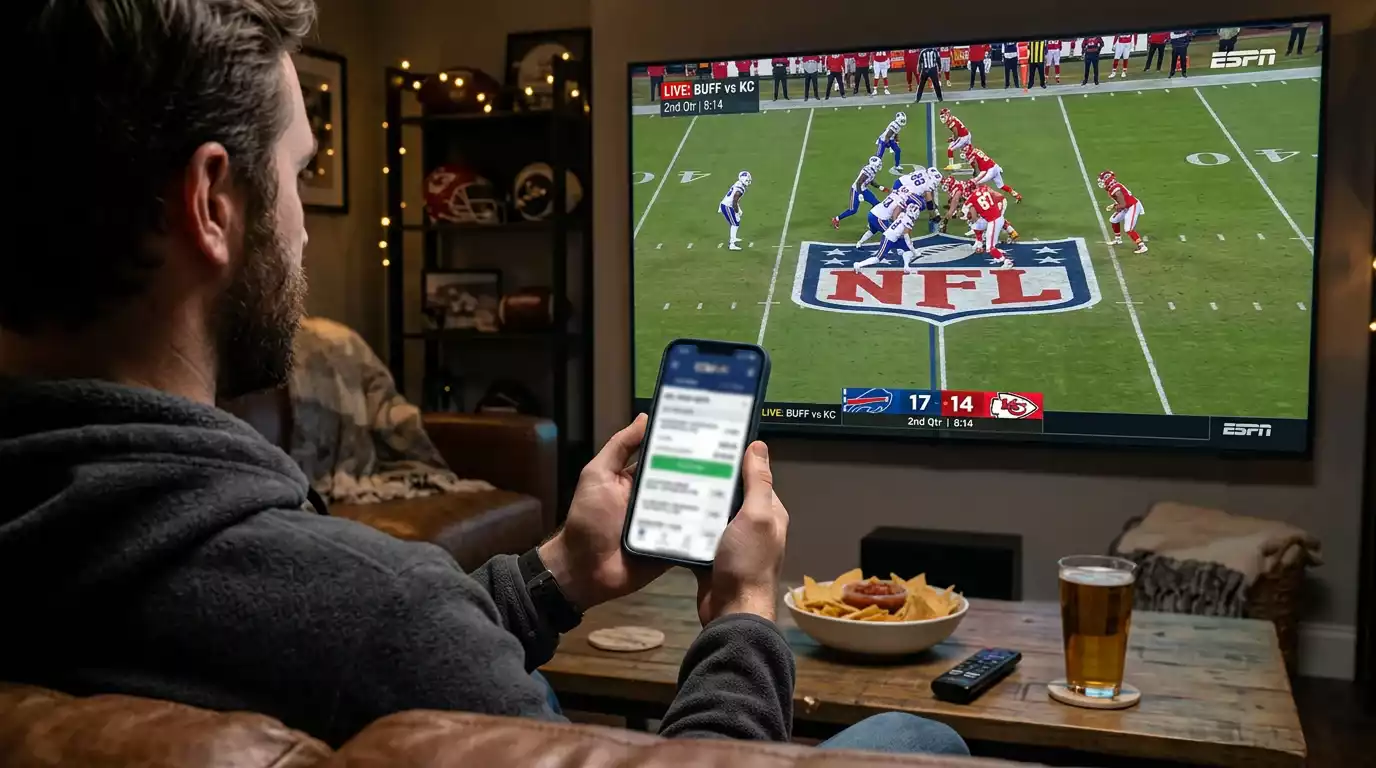
The first time I placed a live prop bet, I did it on impulse. A quarterback had just thrown a 60-yard pass, and the adrenaline hit. I hammered his passing yards over without checking the remaining line, the current total, or the game situation. He finished five yards short. That bet taught me something the pregame market never could: live prop betting rewards preparation and punishes reaction.
In-play betting accounts for more than 60% of all online football wagers across European markets according to industry data. The NFL live prop market is growing every season, driven by mobile platforms that update odds in real time. In the UK, where 78% of bets are placed on mobile devices per global industry figures, the infrastructure is already built for live prop engagement. The question isn’t whether you can bet props live – it’s whether you can do it profitably.
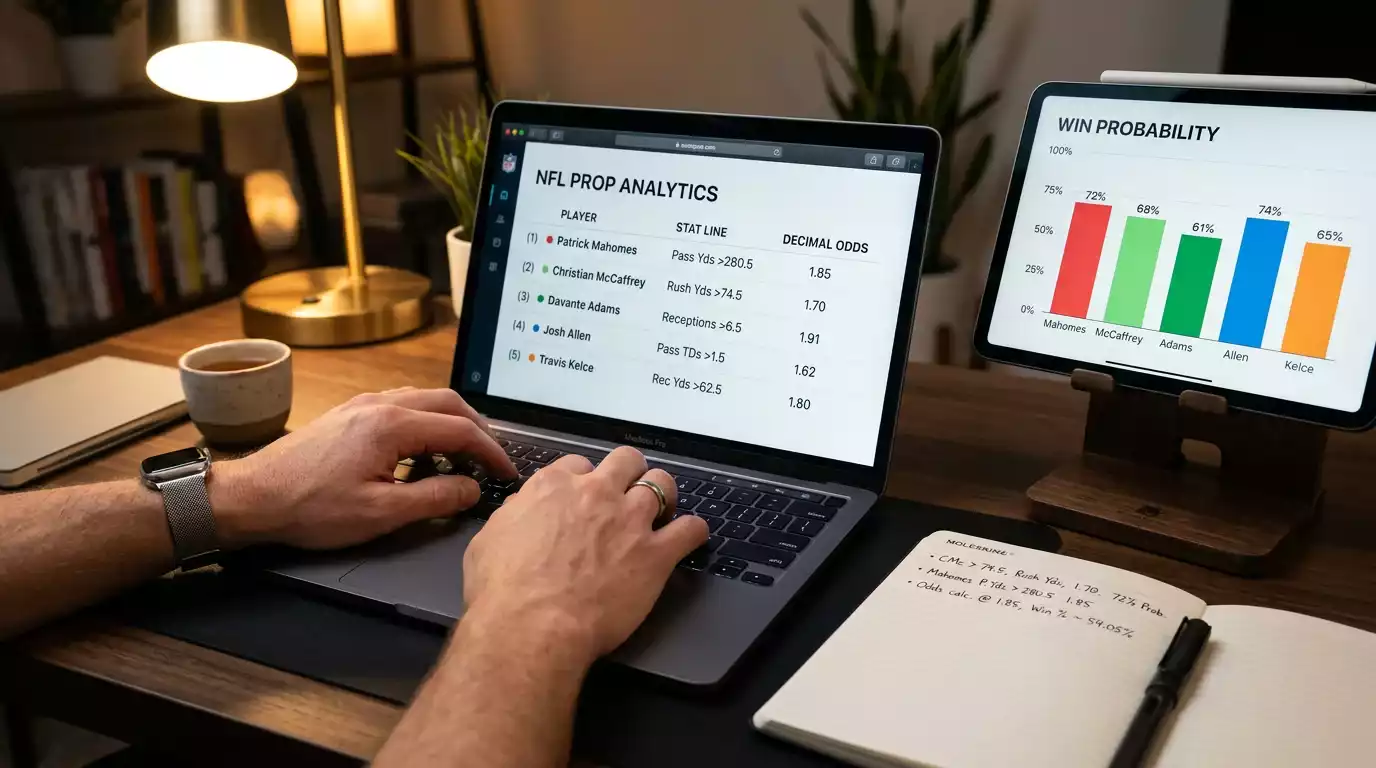
When making quick in-play decisions, using an NFL prop bet calculator helps you instantly determine the expected value of shifting odds.
Operating NFL Live Player Prop Betting Lines
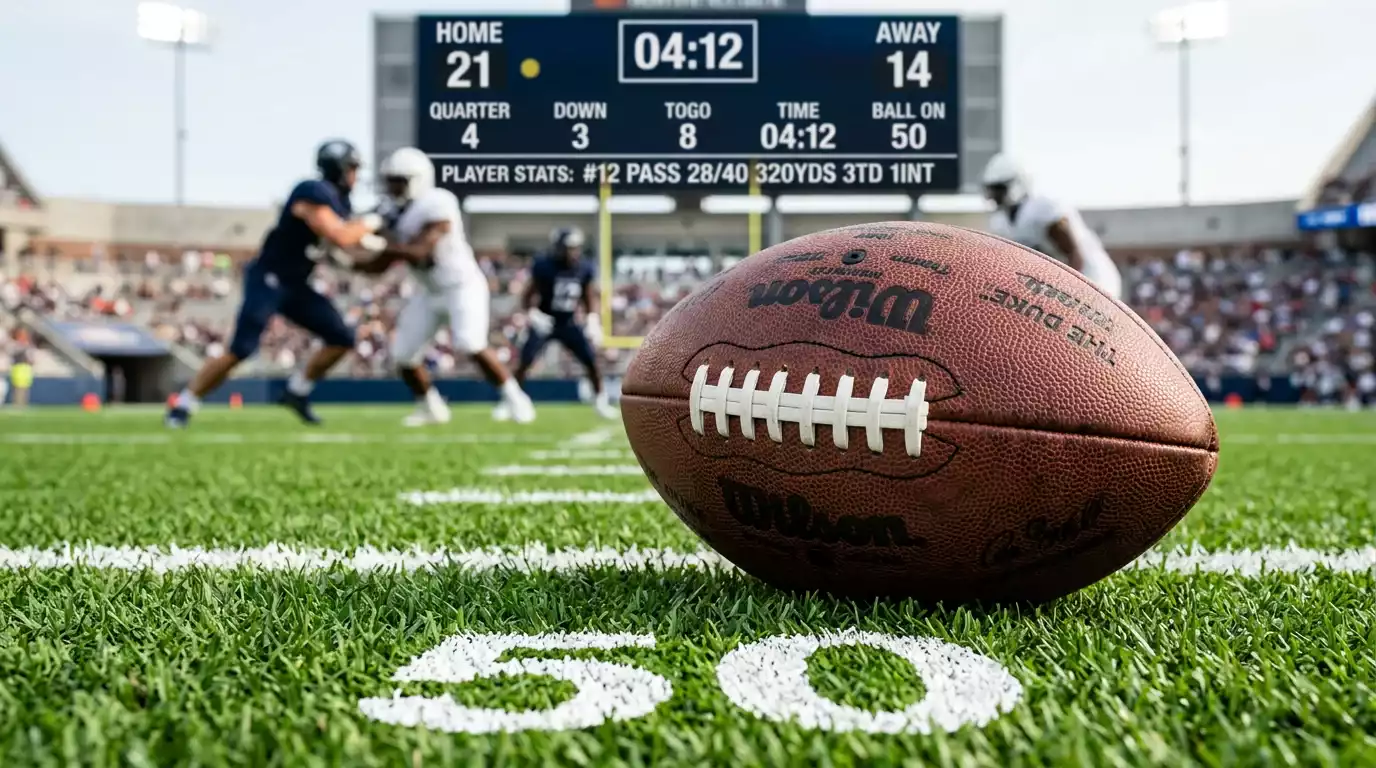
Live prop markets differ from pregame markets in one critical way: the line adjusts continuously based on what has already happened. If a quarterback has thrown for 150 yards by halftime against a pregame line of 260.5, the live over/under might reset to 265.5 for the full game – reflecting his current pace plus the expected second-half output. The sportsbook’s models recalculate after every drive, incorporating score, time remaining, and game flow.
The speed of these adjustments creates both opportunity and danger. Opportunity, because the models are reactive rather than predictive – they respond to what just happened rather than anticipating what’s about to change. If you can identify a momentum shift before the model captures it, you have a brief window of mispriced odds. Danger, because the temptation to chase action in real time is enormous, and the margins on live props are typically wider than pregame markets to compensate for the pricing risk the sportsbook absorbs.
Live props are available on most UK sportsbooks during NFL broadcasts, but the range of markets narrows as the game progresses. By the fourth quarter, you might only have access to game-total props rather than individual player lines. The widest selection of live player props is available in the first half, which is also when the information asymmetry between bettor and model is largest.
Where Value Appears in Live Prop Markets
The most reliable live prop value I’ve found comes from game-script shifts that the model is slow to price. Picture a team trailing 14-0 after the first quarter. The live model projects continued struggling, so the quarterback’s passing yards prop stays depressed. But if I’ve watched the game and noticed that the defence just lost a starting cornerback to injury – information that the model processes statistically but not contextually – the passing environment is about to change in a way the current line doesn’t reflect.
Halftime is the single best moment to find live prop value. The sportsbook resets lines based on first-half data, and the general public’s engagement peaks during the break. Casual bettors often overreact to first-half performance: a running back who had 45 yards in the first half gets hammered on the over for the game, even though his first-half pace was inflated by a single long run that’s unlikely to repeat. That overreaction creates an under opportunity that experienced bettors can exploit.
Weather-driven shifts during a game also produce live prop value. A game that starts calm can develop wind or rain by the second half, suppressing passing props that were priced under clear-sky assumptions. If you’re watching a game and see conditions deteriorating – flags on the field starting to whip, punts sailing sideways – the passing yards under becomes attractive before the live model fully adjusts for the changed environment.
Get real-time updates and expert analysis on the premier NFL player props portal to enhance your live betting experience.
Managing the Risks of In-Play Prop Betting
Dr. Joshua Grubbs, a clinical psychologist at the University of New Mexico, has argued that placing limits on in-play betting is wise because it reduces the risk of impulsive behaviour. That research resonates with my own experience. Live betting creates a feedback loop – you place a bet, you watch the result in real time, and the dopamine hit encourages you to place another immediately. The cycle is faster and more intense than pregame betting, and it can overwhelm your bankroll controls if you’re not deliberate about managing it.
I use three rules for live prop betting. First: I never bet live on a game I haven’t analysed pregame. If I haven’t done the matchup research and identified potential prop targets before kickoff, I don’t engage with the live market. Winging it in real time against a model that updates every possession is a losing proposition.
Second: I set a per-game live betting budget that’s separate from my pregame bankroll. If I allocate two units for live props on a Sunday night game and I lose both, I stop. The budget is the guardrail that prevents the feedback loop from escalating.
Third: I take breaks between live bets. If I place a live prop at halftime, I wait at least one full drive before considering another. That forced pause breaks the impulse cycle and creates space for genuine analysis rather than emotional reaction.
The intersection of live props and pregame game-script analysis is particularly powerful. If you’ve already mapped the likely flow of a game before kickoff, you can anticipate which live prop opportunities will appear and pre-commit to specific conditions under which you’ll act. That pre-commitment eliminates most impulsive decisions because the bet was planned, not reactive. For the pregame framework that feeds into live analysis, the game script and player props guide covers the foundational thinking.
Are live NFL prop bet odds less efficient than pre-game lines?
They can be, particularly around game-script shifts, halftime resets, and in-game injuries that the sportsbook model is slow to process contextually. However, the margins on live props are typically wider than pregame markets to compensate for pricing risk. The inefficiency exists, but you need a larger edge to overcome the wider vig.
What responsible gambling tools help manage impulsive live prop bets?
Most UK sportsbooks offer deposit limits, session timers, and reality check pop-ups that are particularly useful during live betting. Setting a separate per-game budget for live props and committing to breaks between bets also helps. If you notice live betting becoming compulsive, the GAMSTOP self-exclusion scheme provides a structural barrier.
Prepared by the nfl Best Player Prop Bets editorial staff.