NFL Injury Impact on Player Prop Markets
 Available in US
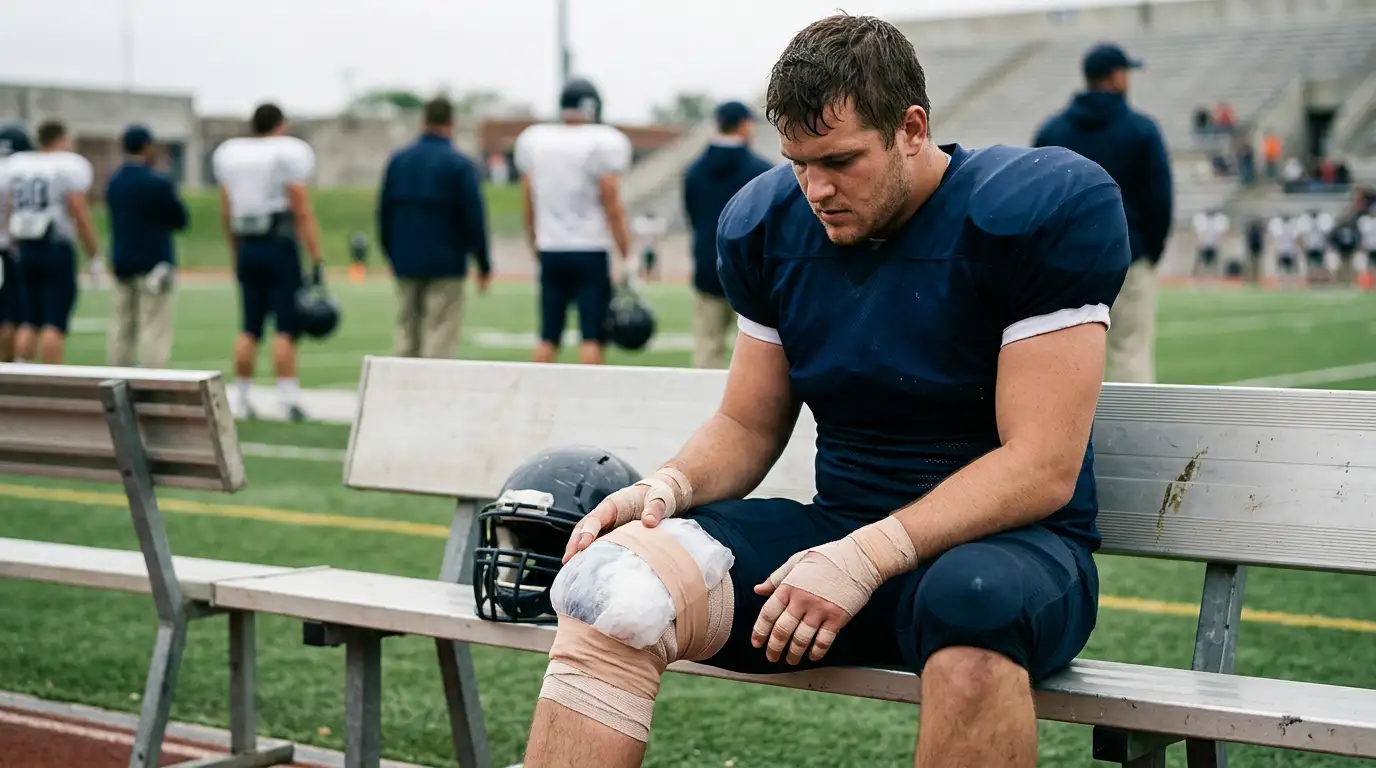
The most profitable prop bet I placed last season came from an injury report, not from film study. A starting defensive end was listed as out on Friday afternoon, and by Saturday morning the opposing quarterback’s passing yards line had barely budged. The sportsbook’s model hadn’t fully absorbed the downstream effect of losing the defence’s best pass rusher. I took the over, the quarterback threw for 310 yards against a toothless pass rush, and the line corrected by Sunday morning – too late for anyone who hadn’t been paying attention on Friday.
Since 95% of UK bets are placed online according to industry data, lines update fast and bettors have real-time access to the same injury information that moves markets. But speed of access isn’t the same as speed of interpretation. The bettor who understands the ripple effects of an injury – not just the direct impact but the second- and third-order consequences – has a window of opportunity that often stays open for hours before the market fully adjusts.
NFL Injury Designations and Prop Betting Value
The NFL requires teams to publish injury reports on Wednesday, Thursday, and Friday during the regular season. Each listed player receives a designation: Out, Doubtful, or Questionable. A fourth status – Injured Reserve – removes a player for a minimum of four games. Understanding what each designation actually means in practice, beyond the dictionary definition, is the first step to using injury data profitably.
Out means the player will not play. This is the only designation that provides certainty. When a key player is ruled out, the sportsbook adjusts props immediately, and the value window is narrow. But the props of his teammates and opponents still shift, and those secondary adjustments often lag behind.
Doubtful means the player is unlikely to play. Historically, roughly 75% of players designated as doubtful end up inactive on game day. Treat doubtful as functionally out for analysis purposes, but don’t commit until the final inactive list confirms it.
Questionable is the designation that creates the most opportunity – and the most confusion. It covers everything from “he’ll definitely play but the team is being cautious” to “he’s a genuine coin flip.” About 70% of questionable players end up active, but that 30% who sit out can swing prop lines dramatically. The key is reading between the lines: practice participation (full, limited, or DNP), the nature of the injury (soft tissue vs. structural), and the coaching staff’s historical patterns with injury designations all provide clues that the raw designation doesn’t.
How One Injury Reshapes Prop Lines Across the Roster
This is where most bettors stop too early. They see a receiver ruled out and adjust that receiver’s props accordingly – which the sportsbook has already done. The sharper play is mapping the ripple effects across every prop on the board.
When a team’s number-one wide receiver is ruled out, his target share gets redistributed. The number-two receiver might absorb 40% of those vacated targets, the tight end another 30%, and the running backs the remainder. Each of those players’ receiving props should shift upward, but the sportsbook doesn’t always adjust all of them simultaneously or proportionally. The UK online market processes around 290 million sports bets monthly per Statista data – the sheer volume of action on mainstream props means those lines move fast. But secondary props on role players often take longer to correct.
Defensive injuries create even more interesting cascading effects. When a starting cornerback is out, the opposing receivers benefit – that’s obvious. Less obvious: the defensive coordinator might shift a safety into a coverage role, weakening run defence and boosting the opposing running back’s prop outlook. Or the defence might blitz less frequently to compensate for the coverage weakness, which gives the quarterback more time and raises his passing yards ceiling.
I map these ripple effects on paper before checking the updated lines. If my projected adjustment is larger than the sportsbook’s, I have a bet. If the sportsbook has already fully absorbed the impact, I move on. That discipline prevents me from forcing bets where the market has already priced in what I know.
When to Bet: Timing Around Injury Announcements
Timing is the tactical edge that separates reading injury reports from profiting from them. The NFL injury report cycle creates predictable windows of information release, and each window has a different strategic implication.
Wednesday’s initial report is mostly noise. Teams are required to list every player who missed or was limited in practice, and the designations are preliminary. I read it for context – which players are new to the report, which recurring injuries are still present – but I don’t bet based on Wednesday information alone.
Thursday narrows the picture. Players whose status improves from Wednesday to Thursday are genuinely trending toward playing. Players who remain limited or are downgraded are worth monitoring closely.
Friday is decision day. Final designations are published, and the Out/Doubtful/Questionable labels carry real weight. This is when I place most of my injury-informed prop bets. The window between Friday afternoon’s report and Saturday morning’s line adjustments is the most productive time to act. John Murray, VP at SuperBook, once described his ideal game as one boring enough to fall asleep watching – the kind of game where nothing unexpected happens. Injuries are the opposite: they introduce chaos, and chaos creates pricing errors.
For Sunday morning games in UK time, the final inactive lists drop roughly 90 minutes before kickoff. If a questionable player is a late scratch, his teammates’ props might not adjust until minutes before the game starts. I keep my sportsbook app open and ready during that window because the last-minute inactive announcement is the single highest-value moment of the entire week for injury-informed prop betting. If you’re building a systematic approach around these timing windows, understanding the broader NFL prop betting strategy framework will help you integrate injury analysis into a repeatable process.
Should I bet on a player prop before or after the final injury report?
After, in most cases. The final Friday injury report provides the most reliable designations, and waiting until then prevents you from betting on incomplete information. The exception is when early-week reports reveal a clear injury impact that the market hasn’t priced in – for instance, a starting defensive player ruled out on Wednesday whose absence affects opposing offensive props that remain unchanged.
How does a star player’s absence affect the opposing team’s props?
The impact depends on the position. A missing top cornerback benefits opposing receivers directly and may also shift the defensive scheme in ways that boost the opposing quarterback’s and running back’s props. A missing pass rusher reduces pressure on the opposing quarterback, raising passing prop ceilings. Always map the secondary and tertiary effects rather than stopping at the obvious first-order impact.
Prepared by the nfl Best Player Prop Bets editorial staff.