NFL Game Script Projections for Player Props
 Available in US
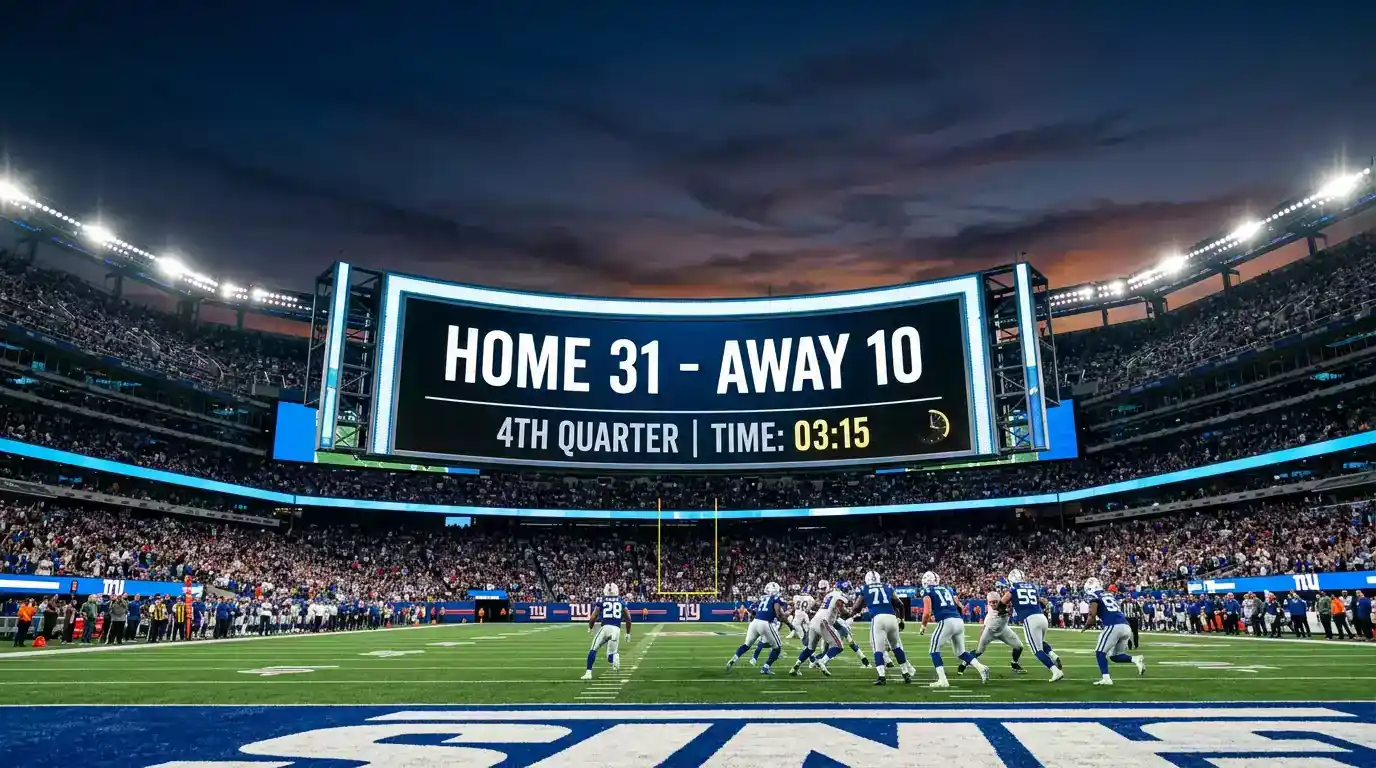
Last November I watched a game where the starting quarterback for the trailing team threw 52 passes. His season average was 34. The game script – down 17 points by halftime – forced the offence into permanent passing mode, and every prop tied to that quarterback’s volume exploded past its pregame line. Meanwhile, the winning team’s running back feasted on clock-killing carries in the fourth quarter, easily clearing his rushing yards over. The game script rewrote both sides of the prop board in real time, and it was entirely predictable from the pregame spread.
In-play betting accounts for more than 60% of all online football wagers in Europe according to industry data, and a huge part of that live market is driven by game-script shifts. But you don’t need to bet live to profit from game script – the projected flow of a game, estimated before kickoff, is one of the most useful inputs for pregame prop analysis. If you can read what a game is likely to look like, you can identify which props are mispriced relative to the expected flow.
Implied Team Totals and NFL Prop Betting Lines
The concept that unlocks game-script analysis for props is the implied team total. It’s not a number the sportsbook publishes directly – you derive it from the game total and the point spread. If a game has a total of 48.5 and one team is favoured by 6.5 points, the favourite’s implied total is 27.5 and the underdog’s is 21. That split tells you the market’s expectation for each team’s offensive output, and it’s a far better predictor of individual prop outcomes than looking at the combined game total alone.
A team with an implied total of 28 or above is expected to score four touchdowns. That creates volume and opportunity for every skill player on the roster. The quarterback will throw more, the running backs will see carries in positive game scripts, and the receivers will get targets in situations where the offence is executing rather than scrambling. Props tied to that team’s offensive players should generally skew toward overs – not blindly, but with the understanding that the market expects a productive offensive day.
Conversely, a team with an implied total below 18 is expected to struggle offensively. NFL football remains approximately 34% of all US sports betting handle per Doc’s Sports data, and much of that handle comes from casual bettors who ignore implied totals and bet on season averages instead. When you’re analysing props for a team expected to score fewer than three touchdowns, the under on most offensive props becomes structurally attractive.
Blowout Scripts vs Close Games: Different Prop Landscapes
A 14-point spread doesn’t just tell you who’s expected to win – it tells you what the second half will look like. When one team builds a large lead, the game flow bifurcates. The leading team runs the ball to kill clock, and the trailing team abandons the run to throw deep and catch up. Those two simultaneous shifts create opposite effects on the prop board.
For the favourite in a projected blowout: the running back’s props get a boost. He’ll see additional carries in the second half as the coaching staff protects the lead with conservative play-calling. The quarterback’s volume decreases – fewer passes, shorter throws, more handoffs. Receiver props for the favourite tend to cap early because the offence shifts away from aggressive passing once the lead is secure.
For the underdog in a projected blowout: the inverse. The quarterback will throw more, but the efficiency drops because the defence knows pass is coming. Interception risk rises. Completion percentage falls. Passing yards can still go over because of sheer volume, but it’s ugly volume. I’ve seen quarterbacks throw for 330 yards in games their team lost by 24 – the yardage came in garbage time against a defence playing soft coverage to protect the lead.
Close games – spreads of three points or fewer – produce a more balanced script. Both teams run their base offences, and the play-calling isn’t distorted by score. Props in close games are harder to exploit through game-script analysis because neither team is forced into extreme adjustments. In those spots, I rely more on matchup data and less on projected flow.
The Garbage Time Effect on Passing and Receiving Props
Garbage time is the most misunderstood phenomenon in NFL prop betting. The final ten minutes of a game that’s already decided produce statistical output that looks productive but isn’t meaningful. Quarterbacks complete passes against prevent defence. Receivers rack up yards on routes that the defence deliberately concedes. The stats are real – they count for prop settlement – but they don’t reflect genuine offensive quality.
This creates a strange dynamic: betting the over on quarterback passing yards for a team you expect to lose badly can be profitable, even though the team is going to have a terrible game. The volume of garbage-time throws compensates for the early-game struggles, and the combined output crosses a line that was set based on average game flow rather than blowout-specific patterns.
I use this framework selectively. Not every blowout produces garbage time – some teams pull their starters early, some run the ball to end the game, and some defences don’t drop into prevent until the final five minutes. The best garbage-time props targets are quarterbacks on bad teams with high pass volumes who play in games with high totals. Their props are set based on a blended expectation of normal and garbage-time production, and when the game goes sideways, the garbage-time volume pushes the total past the line.
If game-script reading is about pregame preparation, the logical extension is thinking about what happens when the script flips mid-game. That’s the territory of live prop betting strategy, where the real-time flow creates entirely new sets of opportunities.
How do I find the implied team total for an NFL game?
Take the game total and the point spread. Add half the spread to the game total and divide by two for the favourite’s implied total. Subtract half the spread from the game total and divide by two for the underdog’s. For example, a game total of 47 with a 7-point spread gives the favourite an implied total of 27 and the underdog 20.
Does garbage time make over bets on quarterback props more attractive?
It can, but selectively. Quarterbacks on teams expected to trail heavily often accumulate garbage-time passing yards against soft prevent defence. The key is identifying games with projected blowout scripts where the trailing team’s quarterback will keep throwing. Not all blowouts produce garbage time — some teams run the clock or pull starters early.
Created by the ”nfl Best Player Prop Bets” editorial team.